

How to test the performance of a PPH wound ion exchanger?
Nov 09, 2026
Leave a message
If you’re here, chances are you’re either working with PPH wound ion exchangers already, or you’re looking to make sure the one you’re using (or about to buy) is actually doing what it’s supposed to. As a supplier of PPH wound ion exchangers, I get tons of questions from clients—most boil down to: “How do I know this thing is performing like it should?” It’s not just about picking a product that fits your setup; testing its performance is what keeps your process on track, whether that’s water treatment, chemical purification, or something else entirely.
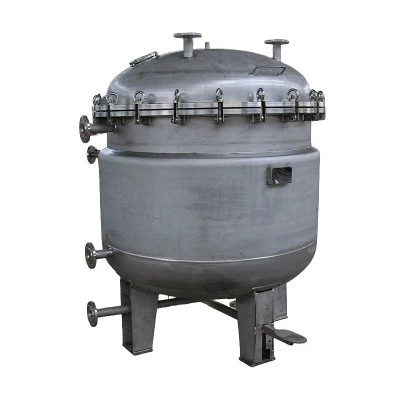
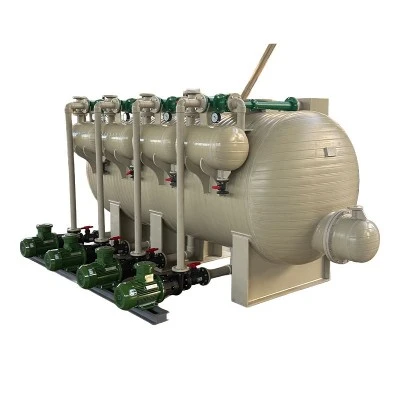
First, let’s start with a quick refresher on what a PPH wound ion exchanger is, just in case. PPH (Polypropylene Homopolymer) wound products are made by winding porous polypropylene strips around a core, creating a structure that’s sturdy, chemical-resistant, and perfect for ion exchange—meaning it pulls unwanted ions (like heavy metals, salts, or other contaminants) out of a liquid stream. We make a range of these products here at our company, including the core PPH Wound Ion Exchanger, plus related gear like PPH Wound Heat Exchanger, PPH Wound Purification Tower, and anti-static versions for more sensitive setups, like the Anti Static PPH Falling Film Absorber or Anti Static PPH Wound Purification Tower. But today, we’re focused specifically on testing the ion exchanger’s performance—no confusing jargon, just actionable steps.
-
Pre-Test Prep: Don’t Skip This, It Makes or Breaks Results
You can’t test an ion exchanger if you don’t get the basics right. First, you need to know your process parameters cold: what’s the flow rate of the liquid going through it? What’s its temperature? What’s the pH? Those numbers change with your application, and if you test at a flow rate way higher than your normal use, you’ll get a false good (or bad) result.
Next, make sure the exchanger is properly conditioned before testing. PPH wound products have a manufacturing residue sometimes, like small polypropylene particles or leftover binders. Run clean, pH-adjusted water through it for 30 to 60 minutes (depending on size) to flush that out. If you skip this, you might test for ions and end up measuring manufacturing residue instead of the actual exchange you’re after.
Also, set up your sampling points correctly. Most people mess up here: you need two points—one before the ion exchanger (inlet) and one after (outlet). If you sample too close to one end, you might miss any incomplete exchange. For example, if your exchanger is 3 feet long, place the inlet sample point 6 inches before it starts, and the outlet sample point 6 inches after it ends. Simple, but super important. -
Key Performance Metrics to Test (What Actually Matters)
Ion exchangers are all about two main jobs: removing target ions, and not letting your flow drop too much (that’s pressure drop, by the way). These are the two metrics you need to track.a. Ion Removal Efficiency (The Whole Point)
This is the big one. The goal is to pull as much of your target ion (say, lead, calcium, or nitrate) out of the liquid as possible. The formula is straightforward:
Removal Efficiency = [(Inlet Ion Concentration – Outlet Ion Concentration) / Inlet Ion Concentration] x 100
Wait, let’s make that concrete. If your inlet has 10 ppm of your target ion, and your outlet has 1 ppm, that’s a 90% removal rate. If it’s only 10%? Your exchanger is worn out, or it’s the wrong type for your ion.
How do you measure the concentrations? There are cheap, easy methods for small operations (test strips) and more accurate ones for industrial use (pH meters paired with ion-selective electrodes, or lab testing with atomic absorption spectroscopy). For most of our clients, test strips work great for routine checks, and we can help you pick the right ones for your specific ion if you’re not sure.
Pro tip: Test at normal operating flow, not a slowed-down flow. If you crank the flow way down, the exchanger has more time to grab ions, so your efficiency will look better than it actually is for your real process. That’s a common mistake—don’t do it.b. Pressure Drop Across the Exchanger
Ever had a water filter that worked great at first, but then your pump started making more noise? That’s pressure drop. As the PPH wound structure traps ions and contaminants, the tiny pores in the winding get clogged up, so more force is needed to push liquid through.
You measure this with a simple pressure gauge: one on the inlet side of the exchanger, one on the outlet. Subtract the outlet pressure from the inlet, and that’s your pressure drop. What’s normal? For our standard PPH wound ion exchangers, a healthy pressure drop is usually between 1 and 3 psi at recommended flow. If it’s over 5 psi? That means it’s fouled, and you need to clean or replace it.
Why does this matter? If pressure drop is too high, your pump has to work harder, which wastes energy and can damage your equipment over time. It’s a quick test to do every month, no lab work needed. -
Routine vs. Final Performance Tests: How Often Should You Test?
Testing shouldn’t be a one-and-done thing, right? Let’s break it down:
- Final Test (When you get a new ion exchanger, or install a new one): Do a full ion removal and pressure drop test right after installation. Compare the results to the manufacturer’s specs (we post these on our product page, by the way—check out the PPH Wound Ion Exchanger for details). If your numbers are way off, it might be a defect, and we’ll fix it no questions asked.
- Routine Tests (Every 1 to 3 months, depending on use): For most industrial clients, a quick ion check and pressure drop measurement is enough. If you’re using the exchanger in a high-contaminant process (like treating wastewater), test every 2 weeks. If it’s for a clean process (like lab water), once a quarter works.
- End-of-Life Test: When removal efficiency drops below your required threshold, or pressure drop is way too high, that’s your sign to replace it. Don’t wait until your product is contaminated—small tests catch issues early.
- Common Mistakes to Avoid (I See These All the Time)
Let’s get real here— I’ve worked with ion exchangers for years, and I’ve seen every mistake in the book. Here are the ones that kill performance tests:
- Ignoring pH and temperature: PPH works best in a pH range of 4 to 10, and temperature below 180°F. If your liquid is pH 12 or 200°F, the ion exchanger won’t work as well, and your test will look bad even if the product is fine. Always test pH/temp first, and adjust if needed before testing.
- Sampling at the wrong time: If you test right after you restart your system after a shutdown, the exchanger might be saturated with leftover solution, leading to weird outlet numbers. Run the system for 15 to 30 minutes to stabilize before sampling.
- Using the wrong exchanger for your ion: Not all ion exchangers are the same. Some are good for cations, some for anions, some for specific heavy metals. If you use a cation exchanger to pull nitrates (anions), it won’t work—no matter how good your test is. Double-check that the exchanger matches your target ion before you even test.
So, that’s the basics. Testing a PPH wound ion exchanger isn’t rocket science, but it does take a little attention to detail. The key is to test at your actual operating conditions, track both ion removal and pressure drop, and do it regularly to catch issues early. If you’re in the market for a new one, we build our PPH Wound Ion Exchanger with quality PPH and precision winding, so it stands up to tough processes. We also have other plastic wound products, like the PPH Wound Heat Exchanger and PPH Wound Purification Tower, if you need to round out your system. If you have questions about testing, sizing, or ordering, feel free to reach out to our team to talk through your needs. We’re here to help you get the most out of your equipment.
References


- Polypropylene Homopolymer (PPH) Wound Media for Liquid Filtration and Ion Exchange, Industrial Plastics Journal, 2022
- Ion Exchange Performance Testing Guidelines for Polypropylene-Based Process Equipment, American Society of Mechanical Engineers (ASME) B31.3 Supplement, 2021
- Pressure Drop and Fouling in Porous Wound Filter Media, Journal of Environmental Engineering, Vol. 147, No. 8, 2021
Send Inquiry