
What is the operating pressure range for an Anti Static PPH Falling Film Absorber?
Nov 06, 2026
Leave a message
If you work in industrial gas treatment, chemical processing, or pollution control, you’ve probably heard of falling film absorbers—they’re key for efficiently scrubbing contaminants from gas streams while keeping energy use low. But if you’re sourcing one that’s safe for handling static-prone chemicals, an anti static PPH (polypropylene homopolymer) falling film absorber is your go-to. As someone who’s been selling these for years, I get how confusing it can be to nail down the right operating pressure range. A lot of folks mess this up either by going too wide (wasting money on overbuilt parts) or too narrow (risking leaks or static buildup that can ignite flammable materials). Let’s break this down like we would in a shop floor chat, no stuffy jargon.
First, let’s ground this in what makes anti static PPH different from regular PPH. Standard PPH is pretty flammable and builds up static easily—super bad when you’re dealing with solvents like hydrochloric acid, sulfuric acid, or organic vapors. Anti static PPH is modified with conductive additives (usually carbon black or metal fibers) that drain static to the ground at a rate of 10^4 to 10^11 ohms per square, which meets OSHA and NFPA standards for preventing electrical sparks. That modification doesn’t just change safety—it also affects how the part holds up to pressure, because the additives can slightly weaken the material’s tensile strength compared to virgin PPH. That’s a critical detail most first-time buyers miss.
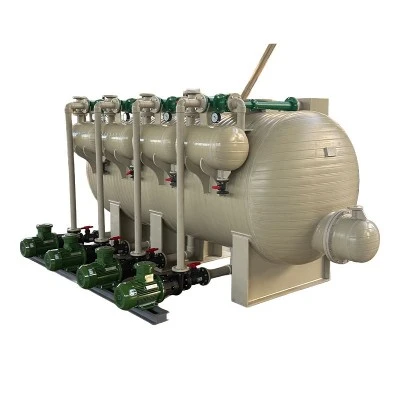
So what’s the actual pressure range? From years of field data and working with process engineers, the sweet spot for these absorbers is between -0.5 bar (vacuum) to +1.6 bar (positive pressure) relative to atmospheric pressure. Wait, why that range? Let’s split it into negative and positive sides, because that’s where most people run into issues.
On the negative pressure side (vacuum), most anti static PPH absorbers are rated down to -0.5 bar. Go lower than that—like -0.6 bar or deeper—and the material can buckle. PPH has a lower modulus at low pressures, and the conductive additives reduce its structural rigidity just enough that extreme vacuum makes the walls cave in. We’ve seen this happen once with a small-scale chemical plant that tried to pull -0.7 bar to boost absorption rates; their absorber warped so bad they had to replace it in 6 months, instead of the usual 3-5 year lifespan. That said, if you really need deeper vacuum, we can adjust the design with reinforced PPH walls, but that’s a custom build, not our stock unit. Also, vacuum systems often pair with vacuum units, and we have a PPH Wound Eco Friendly Vacuum Unit that’s sized to match our standard absorbers, so you don’t have to mix and match parts that won’t play nice.
On the positive pressure side, our stock anti static PPH absorbers max out at 1.6 bar. Why not higher? Again, the conductive additives take a small hit to pressure tolerance. Virgin PPH can handle up to 2.5 bar, but once you add the static-draining compounds, that drops because the material’s molecular structure is slightly disrupted. For most processes—whether you’re scrubbing gas for a food manufacturing plant or treating off-gas from a pharma facility—1.6 bar is more than enough. The only time you’d need higher is if your gas feed is at a really high pressure, and in that case, we can reinforce the shell with fiberglass-wrapped PPH, but that’s a custom order, not off-the-shelf.
Now, there are caveats that change the range depending on what you’re using the absorber for. If you’re handling aggressive chemicals—like concentrated sulfuric acid, which eats away at plastic over time—you’ll want to stick to the lower end of that range. We recently worked with a mine that was scrubbing acidic mine gas; they ran at 0.2 to 0.8 bar positive pressure, well under the 1.6 bar max, and their absorber lasted 4 years with no issues. On the flip side, if you’re handling milder solutions, like CO2 scrubbing for a beverage plant, you can push to the upper end of 1.5 bar without any problems.
Another thing people don’t account for: pressure fluctuations. A lot of processes aren’t steady—gas flow can spike, pressure can jump 0.2 bar in a minute. Our absorbers are tested to handle transient pressure changes up to ±0.3 bar, but if your process has bigger swings, you’ll want to add a pressure relief valve. We usually tell customers to size that valve for at least 10% above their max expected pressure, so you don’t risk overpressurizing even if a flow controller glitches.
Wait, let’s talk about why pressure matters beyond just structural integrity. If you run too low a vacuum (less than -0.5 bar), the gas doesn’t flow through the absorber’s film packing evenly. The falling film—the thin layer of liquid that absorbs the gas—breaks up, so you get less absorption efficiency. That means you’re using more water or chemical scrubber than you need, wasting money on raw materials. Run too high a positive pressure, and you can get leaks around the absorber’s flanges. Since it’s anti static, a leak of flammable gas at high pressure is a huge fire hazard—even if the material doesn’t spark, the gas itself can ignite. That’s a risk no one wants to take.
I also get asked if you can mix our absorbers with other plastic components in your system. For example, if you’re using an ion exchanger to pretreat your scrubber liquid, can that connect to our falling film absorber? Yep, just make sure the pressure ratings match. Our PPH Wound Ion Exchanger has the same pressure range as our absorbers, so they’ll work seamlessly together. Same with activated carbon adsorbers—if you’re using those upstream or downstream, our PPH Wound Activated Carbon Adsorber also fits the same pressure specs. That consistency is one of the reasons we love this design—you don’t have to worry about mismatched parts causing pressure issues.


Storage is another angle, even if it’s not directly operating pressure. A lot of customers store their scrubber liquid in tanks, and our PPH Wound Vertical Storage Tank is built to handle the same pressure range as our absorbers, so you can keep your entire plastic system uniform. And if you’re running ductwork to move gas between equipment, our PPH Anti Static Wound Duct is rated for the same pressure swings, so no weak links in your whole setup.
Now, let’s clear up a common myth: some people think anti static PPH absorbers have a wider pressure range because they’re conductive, but that’s not true. The conductivity comes from additives that slightly reduce the material’s mechanical strength, so the pressure range is actually narrower than virgin PPH. We’ve had people come to us asking for an anti static absorber that can handle 3 bar, and we have to be upfront that that’s not possible—we can do a custom reinforced one, but it’s pricier, and usually not necessary for most applications.
What about temperature? Wait, temperature and pressure are linked, right? If you’re running at higher temperatures, PPH’s strength drops, so you’ll want to stay at the lower end of the pressure range. For example, if you’re scrubbing gas at 60°C, don’t push to 1.6 bar—stick to under 1 bar, because heat makes the plastic softer. Our absorbers are rated for temperatures up to 80°C, but pressure tolerance decreases as temp goes up, so that’s another thing to keep in mind when calculating your operating range.
Let’s wrap this up with a quick real-world example. Last year, a small chemical startup in Texas reached out because their first anti static absorber kept failing. They had a generic one from a different supplier that was rated for -1 bar to +2 bar, but they were running it at -0.6 bar, and it cracked after 2 months. We replaced it with our standard absorber, rated -0.5 to +1.6 bar, and adjusted their process to run at -0.3 bar. Now it’s been 18 months, no issues, and their absorption rate is 15% higher because the film is flowing evenly. That’s the kind of win we pride ourselves on.
If you’re in the market for an anti static PPH falling film absorber, don’t just pick the one with the biggest pressure range—make sure it’s matched to your specific process. Too narrow, and you risk structural damage or inefficient scrubbing; too wide, and you’re overspending on features you don’t need. We’ve got stock units ready to ship, and we can customize any part if you have unique pressure or flow requirements. Whether you need a single absorber for a small pilot plant or a full system for a large industrial facility, we can help you get the specs right. Reach out to our team to talk through your needs, and we’ll walk you through every detail to make sure you get a unit that’s safe, efficient, and built to last.
References
- Occupational Safety and Health Administration (OSHA). (2022). Static Electricity Prevention in Industrial Operations.
- National Fire Protection Association (NFPA). (2021). Standard on Static Electricity (NFPA 77).
- Polypropylene Development Association (PDA). (2020). Mechanical Properties of Conductive Modified Polypropylene for Industrial Equipment.
- Process Engineering Magazine. (2023). Design Considerations for Falling Film Absorbers in Chemical Scrubbing Systems.
Send Inquiry