
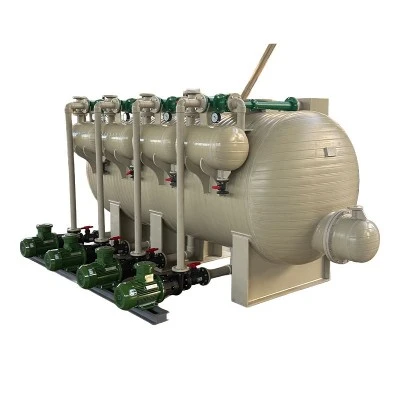

PPH Wound Activated Carbon Adsorber
- Also known as a PPH activated carbon adsorption box or tower
- Uses activated carbon to adsorb organic compounds from exhaust gas through surface interactions and pore capture
- Typical purification efficiency of ≥ 95%, depending on gas composition and operating conditions
- Suitable for low-concentration, high-air-volume exhaust or high-concentration, intermittent exhaust
- Compact structure, low energy consumption, and stable operation
|
Parameter |
Details |
|
Working Principle |
A fan draws or pushes exhaust gas through the system under negative or positive pressure. The gas passes through a filter, where required, before entering the adsorption section. As it flows through the activated carbon bed, organic compounds are captured within the carbon's porous structure and retained on its internal and external surfaces. The treated gas is then discharged through the exhaust system. |
|
Core Advantages |
Activated carbon provides a large adsorption surface area and can remove multiple organic compounds from mixed exhaust streams when the carbon type and operating conditions are suitable. Typical purification efficiency is ≥ 95%. The compact structure occupies relatively little space, and the system can be configured for automatic operation. |
|
Application Conditions |
Suitable for low-concentration, high-air-volume exhaust or high-concentration, intermittent exhaust, subject to the characteristics of the gas stream and the adsorption capacity required. |
|
Pre-treatment Configuration |
For exhaust containing oil mist, dust, or high-temperature gas, a suitable filter, cooler, or other pre-treatment device can be installed at the inlet to protect the activated carbon bed and maintain adsorption performance. |
|
Installation |
The enclosed structure can be configured for indoor or outdoor installation, depending on the site layout and environmental conditions. |
Also known as a PPH activated carbon adsorption box or tower, the PPH Wound Activated Carbon Adsorber is designed to treat organic exhaust gas. It uses activated carbon's porous structure and large surface area to capture organic compounds as the gas passes through the adsorption bed. Depending on the compounds involved, adsorption occurs through physical interactions and, in some cases, chemical interactions with the carbon surface.
During operation, a fan moves the exhaust gas through the system under positive or negative pressure. The gas passes through a filter or other pre-treatment equipment when required, then enters the adsorption section. Organic compounds are retained within the activated carbon's pores and on its surface. The treated gas leaves through the exhaust system. Actual removal performance depends on the gas composition, inlet concentration, airflow, carbon type, bed condition, and operating time.
The system can be used for mixed organic exhaust streams and is particularly suitable for low-concentration, high-air-volume exhaust or high-concentration, intermittent exhaust. Typical purification efficiency is ≥ 95%, although the actual result should be confirmed for the specific application through design calculations or testing.
The PPH tank body provides corrosion resistance for compatible operating environments. Its compact structure helps reduce installation space, while the relatively simple system design supports routine operation and maintenance. Automatic controls can be incorporated according to project requirements.
When the inlet gas contains oil mist, dust, moisture, or excessive heat, pre-treatment may be needed to prevent blockage, protect the activated carbon, and maintain stable performance. The system can be configured for indoor or outdoor installation according to the site conditions, exhaust characteristics, and applicable environmental requirements.
Taizhou Yifan Environmental Protection Equipment Technology Co., Ltd. operates a 19,000-square-meter factory in Taizhou, Zhejiang, with 68 workers. The company has experience supplying organic exhaust gas treatment equipment for spraying plants and chemical plants.
OEM and ODM services are available. Equipment can be manufactured according to customer drawings or prototypes. For each PPH Wound Activated Carbon Adsorber, the exhaust gas composition and airflow, activated carbon type and filling amount, tower material, and interface positions are confirmed before production.
The production process includes PPH raw material and activated carbon inspection, spiral winding, equipment assembly, and commissioning.
Quality checks include adsorption efficiency testing, system pressure drop testing, activated carbon bed filling density checks, and airflow distribution testing. Third-party inspection is accepted. The warranty period is one year.
Standard production lead time: 2 months
Customized production lead time: 3 months
Trade terms: EXW
Packaging: UV-resistant wrapping film, with the equipment secured on pallets
Accepted currencies: USD and EUR
Minimum order amount: RMB 50,000
Standard payment terms: 30% advance payment, with the balance paid before delivery
Customized product payment terms: 50% advance payment, with the balance paid before delivery
Please provide the exhaust gas composition, airflow, activated carbon type, and required filling amount so that the adsorption system can be configured for your application. Drawings or prototypes are also welcome for customized production.
Hot Tags: pph wound activated carbon adsorber, China pph wound activated carbon adsorber manufacturers, suppliers, factory, Chemical PPH Ion Exchange Equipment, High Efficiency PPH Winding Heat Vessel, Industrial PPH Winding Carbon Filter Tank, PPH Wound Heat Exchanger, Static Conductive PPH Ventilation Duct, Wound PPH Reaction Tank
You Might Also Like


Send Inquiry