
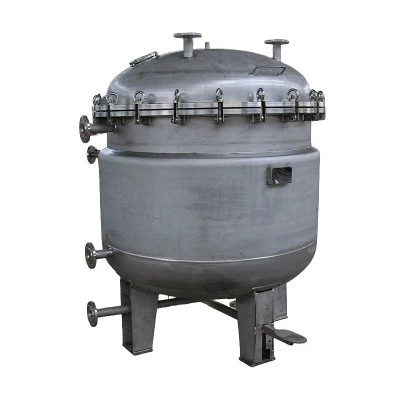
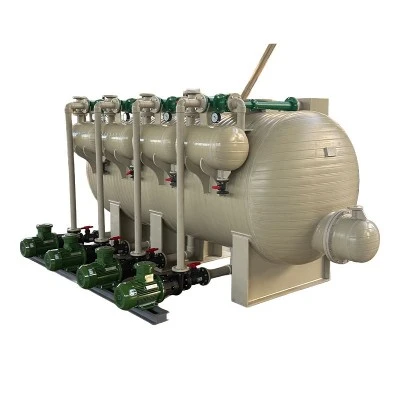

PPH Wound Heat Exchanger
- All-plastic shell-and-tube design for corrosive heat exchange applications
- PPH construction offers resistance to inorganic acids, alkalis, salts, and many organic solvents
- Fixing rings, snap rings, and bolts secure the heat exchange tubes inside the shell
- Routine disassembly for maintenance requires removing the fixing bolts
- Used in pharmaceutical, chemical, dyeing, metallurgy, food processing, environmental protection, chemical fiber, and new energy battery industries
|
Parameter |
Details |
|
Corrosion resistance |
Resistant to many inorganic acids, alkalis, salt solutions, and organic solvents, including alkanes, alcohols, phenols, aldehydes, and ketones. Oxidizing media require separate compatibility assessment. The stated resistance applies to suitable media and operating conditions below 100°C |
|
Temperature and pressure |
PPH softening temperature of 150°C; suitable for long-term use below 100°C, with a normal operating temperature recommended below 70°C |
|
Fixing structure |
Fixing rings, snap rings, and bolts secure the heat exchange tubes inside the shell. The tubes can be accessed for maintenance by removing the fixing bolts |
|
Working principle |
Absorbent liquid flows downward along the inner walls of the tubes as a liquid film and contacts gas flowing in the same direction. Gas that is soluble in the absorbent is absorbed, releasing heat. The heat passes through the tube walls to the cooling liquid and is carried away. The remaining gas and liquid product then enter the gas-liquid separator at the bottom |
|
Applications |
Corrosion-resistant heat exchange in pharmaceutical, chemical, dyeing, metallurgy, food processing, environmental protection, chemical fiber, and new energy battery industries |
This all-plastic shell-and-tube unit is designed for heat exchange in corrosive environments. Fixing rings, snap rings, and bolts hold the heat exchange tubes inside the shell, allowing the tubes to be accessed for maintenance by removing the fixing bolts.
PPH offers resistance to many inorganic acids, alkalis, salt solutions, and organic solvents, including alkanes, alcohols, phenols, aldehydes, and ketones. Compatibility depends on the specific chemical, concentration, and operating temperature. Oxidizing media require particular attention before material selection. PPH has a softening temperature of 150°C and is suitable for long-term use below 100°C, although the recommended normal operating temperature is below 70°C.
The PPH Wound Heat Exchanger has a lightweight structure that simplifies transportation, installation, and maintenance. Its material properties can help reduce scaling and avoid contamination caused by corrosion of metal heat-transfer surfaces. Suitability for food processing depends on the material grade and applicable hygiene requirements.
During operation, the absorbent flows downward along the inner tube walls as a liquid film. Gas flowing in the same direction contacts the film, allowing soluble gas components to be absorbed. The resulting heat of dissolution passes through the tube walls to the cooling liquid, which carries the heat away from the equipment. The remaining gas and liquid product enter the gas-liquid separator at the bottom for separation.
Applications include pharmaceutical production, chemical processing, dyeing, metallurgy, food processing, environmental protection, chemical fiber manufacturing, and new energy battery production.
The company has experience supplying corrosion-resistant heat exchange equipment for pharmaceutical and chemical fiber plants. Each unit is customized according to the inlet and outlet temperatures, flow rates, and properties of the hot and cold fluids, as well as the required heat exchange tube specifications, connection positions, and installation method.
The manufacturing process includes inspection of the PPH raw material, winding and forming, component assembly, and the required testing before packaging. The final configuration is determined by the process conditions and installation requirements.
Quality checks include heat exchange performance testing, airtightness testing, pressure resistance testing, and inspection of the tube-fixing structure. Third-party inspection is accepted. The warranty period is one year.
The standard lead time is approximately two months, while customized orders generally require three months. EXW delivery terms apply. Products are wrapped in UV-resistant film and secured on pallets for transportation. Payments in USD and EUR are accepted.
Minimum order amount: RMB 50,000
Standard payment terms: 30% deposit, with the balance paid before delivery
Customized order payment terms: 50% deposit, with the balance paid before delivery
Please provide the hot and cold fluid temperatures and flow rates, medium properties, and installation requirements so that the appropriate PPH Wound Heat Exchanger configuration can be determined. Drawings or prototypes are welcome for reference during customization.
Hot Tags: pph wound heat exchanger, China pph wound heat exchanger manufacturers, suppliers, factory, Acid Resistant PPH Winding Scrubber Tower, Anti Static PPH Falling Film Absorber, Chemical Anti static PPH Waste Gas Tower, Chemical PPH Ion Exchange Equipment, Industrial PPH Winding Water Treatment Vessel, PPH Wound Ion Exchanger
You Might Also Like


Send Inquiry