

Design Principles Of Stainless Steel For Medical And Chemical Equipment
Aug 17, 2026
Leave a message
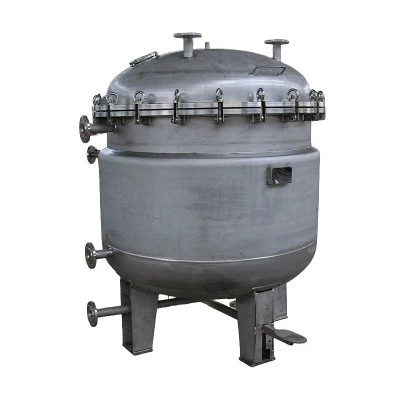
The design principles of stainless steel for pharmaceutical and chemical equipment mainly revolve around material selection, structural strength, corrosion resistance, and process applicability, aiming to ensure stable and safe operation of the equipment in pharmaceutical production, fine chemical processing, and chemical handling. During the equipment design phase, the intended use, operating temperature, operating pressure, media composition, and processing capacity of the equipment need to be determined based on the actual production process before selecting a suitable stainless steel material. Commonly used 304 and 316L stainless steels have good overall performance. 304 stainless steel is suitable for many general production and storage environments, while 316L stainless steel, due to its molybdenum content, has better pitting corrosion resistance in many chlorine-containing media environments and is often used in equipment with high requirements for corrosion resistance and cleanliness. However, different chemical media have different effects on stainless steel; material selection cannot be based solely on the grade but also requires analysis considering media concentration, temperature, and contact time. In terms of structural design, the plate thickness, end cap type, support structure, and connection method should be rationally determined based on the equipment volume, cylinder diameter, load-bearing conditions, and internal pressure. For equipment such as reaction vessels, storage tanks, and mixing tanks, the effects of loads generated by stirring, material weight, and temperature changes must be considered to prevent deformation, cracking, or structural instability during long-term operation. By rationally selecting materials and optimizing equipment structure, durability and operational reliability can be improved while meeting usage requirements.
The design of stainless steel for pharmaceutical and chemical equipment also needs to fully consider the equipment's sealing performance, internal cleaning requirements, manufacturing processes, and subsequent maintenance conditions. In pharmaceutical and fine chemical production, the internal surfaces of equipment often need to be kept clean to prevent residues, impurities, and microbial contamination from affecting product quality. Therefore, the design should rationally arrange inlets, outlets, drains, inspection ports, and pipe interfaces, minimizing hard-to-clean dead corners, and determining the polishing degree and surface treatment method of the internal surfaces according to process requirements. For equipment requiring heating or cooling, a jacketed structure can be used, with circulating hot water, cooling water, or other heat exchange media to regulate the internal temperature. For equipment operating under pressure or vacuum, strength calculations should be performed according to relevant design specifications, and welds, flanges, and sealing components should be rationally designed. During manufacturing, it is necessary to control the quality of processes such as material preparation, forming, welding, grinding, and passivation to reduce the impact of welding defects and surface damage on equipment performance. After the equipment is completed, dimensional checks, welding quality checks, cleanliness checks, and necessary pressure or leakage tests should be conducted according to the actual application to confirm that all performance characteristics meet design requirements. Furthermore, the equipment design should also consider the ease of disassembly and maintenance, enabling timely inspection or replacement of seals, valves, and vulnerable components. Overall, the design of stainless steel for medical and chemical equipment is not simply a matter of determining the material and shape, but requires comprehensive consideration of process requirements, material properties, structural safety, hygiene requirements, and maintenance management. Through reasonable design and standardized manufacturing, the long-term stability, safety, and practicality of the equipment can be guaranteed.
Send Inquiry