

Physical Properties Of Stainless Steel Demisters
Aug 20, 2026
Leave a message
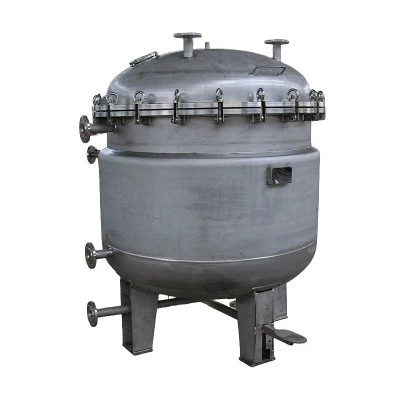
The physical properties of stainless steel demisters mainly include material strength, structural stability, heat resistance, surface characteristics, and airflow adaptability. These properties directly affect the demisting efficiency and service life of the equipment. Stainless steel demisters are typically made of 304 or 316L stainless steel, and common structures include wire mesh demisters and baffle demisters. The specific form needs to be selected based on gas flow rate, droplet size, and equipment operating conditions. Stainless steel has good mechanical strength and rigidity, and under proper design, it can withstand certain loads from airflow impact, equipment vibration, and its own weight, and is not easily deformed by airflow changes during normal operation. Stainless steel also has good heat resistance, making it suitable for many normal and medium-high temperature gas handling environments; however, the actual allowable operating temperature still depends on the material grade, structural form, welding quality, and the medium in contact with the gas. For industrial demister equipment requiring continuous operation, the dimensional stability and structural integrity of the material are particularly important. If the demisting elements deform or the spacing changes, it may affect the airflow distribution, thereby reducing the droplet capture effect. Furthermore, the surface of stainless steel is relatively robust, and after appropriate processing and surface treatment, it can meet the cleanliness and surface quality requirements of different equipment. Therefore, when designing stainless steel demisters, it is necessary to consider the equipment diameter, gas flow rate, operating temperature, and droplet load to rationally determine the plate spacing, wire mesh thickness, support structure, and installation method to ensure the stability of the demister element under actual operating conditions.
Another important physical characteristic of stainless steel demisters is the influence of their surface condition and structural form on droplet capture, drainage, and airflow resistance. In wire mesh demisters, when gas passes through the fine metal wire mesh, droplets adhere to the mesh due to inertial collisions, direct interception, and coalescence, gradually merging into larger droplets, which are then discharged under gravity. In baffle plate demisters, the airflow changes direction along the curved channel, and droplets deviate from the airflow trajectory due to inertia and impact the plate surface, coalescing and flowing down the plate surface. Different structures have different adaptability to droplet size, airflow velocity, and pressure drop; therefore, demister efficiency cannot be judged solely based on material properties. For stainless steel demisters, plate flatness, wire mesh pore structure, component gaps, and surface cleanliness all affect the gas-liquid separation effect. If the airflow velocity is too high, secondary droplet entrainment may occur; if the airflow velocity is too low or there is severe fouling inside the equipment, the processing capacity and drainage effect may be affected. Although stainless steel has good corrosion resistance, pitting corrosion and crevice corrosion may still occur in environments containing chloride ions, strong acids, or other special chemical media. Therefore, the appropriate material grade should be selected according to the actual medium. By rationally designing the demister structure, controlling the gas flow rate, ensuring smooth drainage, and regularly inspecting the equipment, the physical properties of the stainless steel demister can be fully utilized, improving gas-liquid separation efficiency and system operational stability.
Send Inquiry