

Key Technologies For Plastics in Environmental Protection Equipment
Aug 04, 2026
Leave a message
Key technologies for plastics in environmental protection equipment mainly lie in material modification, corrosion resistance enhancement, molding and processing, and equipment connection and sealing. Because environmental protection equipment frequently comes into contact with acid and alkali solutions, industrial wastewater, corrosive gases, and chemical media of varying compositions, high demands are placed on the stability, mechanical strength, and long-term performance of plastic materials. During material development, it is necessary to select appropriate plastic types based on the actual operating environment of the equipment and improve material performance through formulation optimization, filler addition, and reinforcement modification. For example, to address the insufficient stiffness of polypropylene (PP) equipment at certain temperatures, its structural stability can be improved through reasonable reinforcement modification; to address the aging problem of plastic equipment exposed to the outdoors for extended periods, suitable UV stabilizers and antioxidants can be added to the material system to delay performance degradation. Simultaneously, for equipment that needs to handle high-concentration acid and alkali media or special chemical substances, material compatibility tests are required to analyze the impact of different media, temperatures, and contact times on material performance, avoiding problems such as swelling, cracking, discoloration, or strength reduction. In the production and processing stages, extrusion molding, injection molding, thermoforming, and plastic welding technologies are also crucial. Properly controlling processing temperature, molding pressure, cooling rate, and welding parameters helps reduce internal defects, dimensional deviations, and quality problems at joints, thereby improving the overall reliability of plastic components in environmental protection equipment.
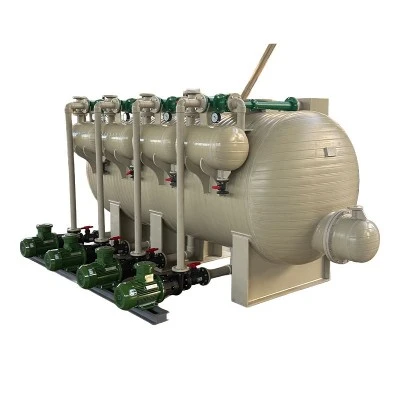
Structural design, connection sealing, and quality inspection are also key technologies in the manufacturing of plastic components for environmental protection equipment. In practical engineering applications, plastic equipment needs to withstand its own weight, media pressure, temperature changes, and mechanical loads generated during long-term operation. Therefore, the strength, stiffness, creep characteristics, and thermal expansion of the materials should be fully considered during the design phase. The wall thickness, reinforcement arrangement, and support structure should be rationally determined to prevent deformation, cracking, or loosening of connections during long-term use. For large plastic storage tanks, exhaust gas scrubbing towers, and wastewater treatment plants, it is usually necessary to focus on controlling weld quality and structural connection methods. Appropriate processes such as hot plate welding, hot air welding, or extrusion welding should be used depending on the material type. Manufacturing quality should be verified through visual inspection, dimensional measurement, sealing tests, and necessary non-destructive testing. For equipment with a risk of corrosive media leakage, flanges, valves, pipe interfaces, and seals should also be carefully inspected to ensure that the connection structure meets the usage requirements. Furthermore, as environmental protection equipment develops towards automation and precision, the standardized manufacturing, modular assembly, and full-process quality traceability of plastic components are receiving increasing attention. By improving material inspection, processing parameter control, finished product testing, and operation and maintenance, problems in the manufacturing process can be identified in a timely manner, reducing the probability of equipment malfunctions. Overall, the key technologies for plastics in environmental protection equipment are not simply material processing technologies, but rather a complete technical system encompassing material research and development, structural design, manufacturing processes, connection and sealing, and quality control. Comprehensive optimization based on the operating conditions of different environmental protection equipment is necessary to ensure the long-term safety and stability of the equipment.
Send Inquiry