

Preparation method of stainless steel for medical and chemical equipment
Sep 16, 2026
Leave a message
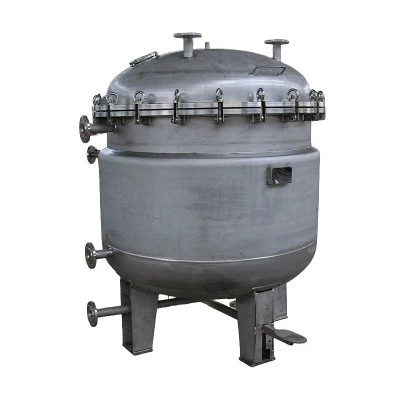
The preparation of stainless steel for pharmaceutical and chemical equipment mainly includes raw material selection, plate processing, forming and manufacturing, welding and assembly, and surface treatment. The entire process needs to be controlled in conjunction with the equipment's application, media characteristics, and production process requirements. In the pharmaceutical, fine chemical, and chemical processing fields, commonly used materials include 304 and 316L stainless steel. 304 stainless steel is suitable for many general storage and processing environments, while 316L stainless steel is often used in applications requiring high corrosion resistance. After the materials arrive at the factory, the material certificate, specifications, and batch information need to be verified, and the surface needs to be inspected for cracks, scratches, rust, and other defects that may affect quality. After passing inspection, the stainless steel plates are processed according to the equipment drawings, including marking, cutting, rolling, and bending, to form cylinders, heads, base plates, supports, and connecting components. For equipment such as reaction vessels, storage tanks, and dispensing tanks, it is also necessary to control the dimensional accuracy and forming quality of each component to avoid significant deformation or excessive assembly gaps. For equipment with complex structures or special process requirements, the plate thickness, interface locations, weld type, and surface treatment requirements should be clearly defined before processing to ensure that each component meets the subsequent assembly and usage conditions.
Stainless steel for medical and chemical equipment typically enters the welding assembly and surface treatment stage. During manufacturing, appropriate welding processes, such as argon arc welding, should be selected based on the material thickness, joint type, and equipment structure. Welding parameters, welding sequence, and interlayer cleaning should be controlled to minimize defects such as porosity, cracks, lack of fusion, and weld deformation. For parts in direct contact with liquid chemicals or other materials, weld quality is particularly important, as welding defects and surface unevenness can increase the risk of material residue, cleaning difficulties, and localized corrosion. After welding, weld inspection, grinding, and polishing should be performed according to the equipment's intended use to ensure the relevant surfaces meet the specified quality requirements. For medical and chemical equipment with hygiene requirements, the inner walls usually require special treatment to avoid leaving obvious welding spatter, sharp edges, and hard-to-clean corners. Depending on the material condition and process requirements, pickling and passivation treatments may also be performed to remove some surface oxides and contaminants and help restore the passivation state of the stainless steel surface. It is important to note that pickling and passivation should employ processes suitable for the materials and equipment intended use, and proper chemical safety management and subsequent cleaning are essential. Surface polishing should not be simply equated with passivation.
Quality inspection, performance verification, and pre-shipment treatment are crucial to ensure the product meets design documents and actual operating conditions. Inspection typically includes checking dimensions, plate thickness, weld quality, surface condition, nozzle locations, and connection points. For pressure equipment, necessary non-destructive testing, pressure testing, or leak checks should be conducted according to equipment category, design documents, and applicable standards. For pharmaceutical production equipment, attention should be paid to internal surface cleanliness, drainage capacity, sealing performance, and cleaning requirements, and cleaning validation or other specialized validations should be conducted as needed, according to relevant quality systems. After inspection, processing residues and impurities inside the equipment should be removed, interfaces should be properly sealed, and packaging and transportation protection should be ensured. Material certificates, welding records, test reports, and experimental data should be compiled to guarantee equipment quality traceability. For large reactors, jacketed tanks, and complex piping systems, it is also necessary to confirm that the assembly relationships of each component, support structures, and interface directions meet design requirements to avoid installation difficulties upon arrival at the site. In general, the preparation of stainless steel for medical and chemical equipment is a systematic process encompassing material management, machining, welding, surface treatment, and quality inspection. Only by strictly controlling each process and implementing targeted treatments based on the properties of the media and the equipment's intended use can the equipment's corrosion resistance, structural reliability, and long-term operational stability be improved.
Send Inquiry