
What is the flow rate capacity of a PPH wound activated carbon adsorber?
Nov 03, 2026
Leave a message
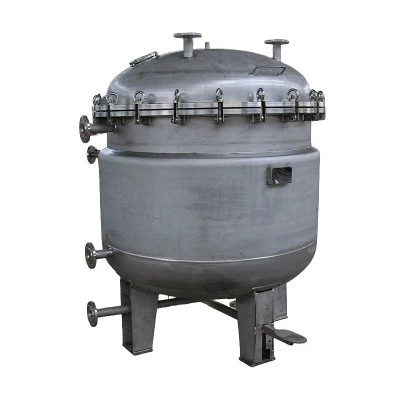
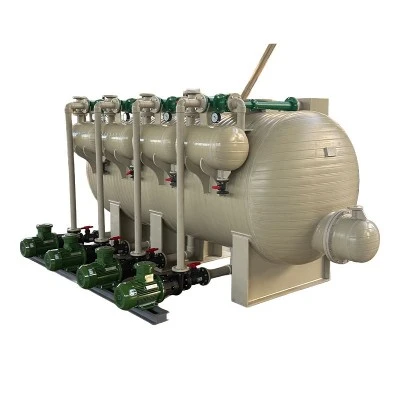
If you’re working in industrial water treatment, air purification, or hazardous gas capture, you’ve probably come across PPH wound activated carbon adsorbers before. If you haven’t, let me break this down simply: PPH (polypropylene homopolymer) wound activated carbon adsorbers are built with porous activated carbon media wrapped into a self-supporting wound structure, housed in a durable PPH shell, making them way more chemical-resistant than traditional steel or fiberglass adsorbers. As a supplier of these units, the question I get asked 10 times a day—no exaggeration—is “what’s their flow rate capacity?” It’s not a one-size-fits-all answer, but today I’ll walk you through what actually determines that number, what you can realistically expect, and how to make sure you’re sizing yours right.


First, let’s debunk a common myth: flow rate isn’t just a random number we pull out of thin air. It’s tied to three big factors: the size of the adsorber, the type of fluid you’re treating (liquid vs. gas), and the contaminants you’re targeting. Let’s start with the unit itself. PPH wound adsorbers come in standard sizes, usually measured by outer diameter and length—think 4-inch diameter x 20-inch length, all the way up to 12-inch x 60-inch, with custom sizes available too. The internal wound carbon structure creates a fixed amount of void space (the gaps between carbon particles where fluid passes through) and surface area (where adsorption happens). That surface area is the star here: more surface area means more contaminants you can grab, which impacts how fast fluid can move through without breakthrough (that’s when contaminants start coming out the other end, which you definitely don’t want).
Now, split this into liquid vs. gas applications because they’re night and day. For liquid treatment—like filtering industrial wastewater, process water, or even drinking water prep—most standard 4” x 20” PPH wound adsorbers have a typical flow rate of 2 to 5 gallons per minute (gpm). Wait, that range is wide, right? That’s because it depends on the water’s TOC (total organic carbon) concentration, pH, and if you’re pre-filtering first. If your water has high levels of oil or grease, you’ll run at the lower end of that range to avoid clogging the carbon pores, which slows flow way down. If it’s clean process water with low contaminants, you can push that to 5 gpm without issue. For a bigger 8” x 40” unit, that jumps to 8 to 15 gpm—enough for small to medium manufacturing lines.
For gas or air treatment—like capturing volatile organic compounds (VOCs), fumes from chemical processing, or hazardous air pollutants—flow rate is measured in cubic feet per minute (cfm), not gpm. Smaller 4” x 20” gas-phase PPH wound adsorbers will handle 10 to 25 cfm, while a large 12” x 60” unit can go up to 100 to 200 cfm. Again, this depends on the gas’s temperature, pressure, and VOC concentration. Hot gases will expand, so you’ll need to lower flow rates to keep the carbon from getting overworked. High VOC loads mean slower flow to ensure every molecule sticks, not just the first ones that pass through.
But here’s the thing: flow rate isn’t the only number you should care about. If you push an adsorber too hard, you get something called “short-circuiting”—fluid or air will take the path of least resistance through the wound carbon, skipping most of the media and leaving contaminants behind. That’s a waste of your adsorber, and you’ll have to replace it way sooner than you should. That’s why at my company, we never just quote a flow rate without first asking you a few basic questions: what fluid are you treating? How dirty is it? What’s your target removal rate? This isn’t guesswork—we tie our capacity calculations to data from lab tests and real-world installations, not marketing fluff.
A lot of people ask me why PPH wound is better than, say, granular activated carbon (GAC) beds or pressed carbon blocks. Let’s be real: GAC beds are great for high flow, but they take up a ton of space, need constant backwashing, and the PPH shell’s chemical resistance doesn’t hold up to strong acids or bases as well as solid PPH housings. Pressed carbon blocks have tight pores, so flow is lower, and they clog easy. Wound carbon? It’s a middle ground—porous enough to let fluid pass quickly, but dense enough to grab contaminants, and the PPH construction means it won’t corrode even if you’re working with 10% HCl or caustic soda. And if you need related units for your system, we also offer PPH Wound Eco Friendly Vacuum Unit for handling wet process streams, PPH Wound Heat Exchanger to control fluid temperature (super important for adsorption efficiency), PPH Wound Ion Exchanger if you need to remove heavy metals along with organics, PPH Wound Vertical Storage Tank to hold treated or untreated fluids, and PPH Anti Static Wound Duct for gas systems that build up static (a huge safety win for chemical plants). All of these work seamlessly with our adsorbers, so you don’t have to piece together a system from different suppliers.
Wait, let’s get back to sizing, because that’s where most people mess up. Let’s take an example: a food and beverage plant I worked with last year needed to filter their process water to remove residual pesticides before it’s used in bottling. They initially wanted a 4” x 20” adsorber at 6 gpm—way higher than our recommended 3 gpm. Why? Their water had a TOC of 15 ppm, which is on the higher side for 4” units. If they pushed 6 gpm, they’d start seeing pesticide breakthrough in just 2 weeks, instead of the 8 weeks we promised at 3 gpm. We ended up upsizing them to two 6” x 30” units in parallel, which handled 6 gpm no problem, and their removal rate stayed above 95% for over 2 months. That’s the trick: sizing for your actual contaminants, not just the flow rate you think you need.
Another example: a chemical manufacturing plant needing to capture VOCs from their solvent evaporation line. They had a 50 cfm line, so they picked a 4” x 20” gas adsorber, which maxes out at 25 cfm. Not only did that mean half their fumes weren’t being filtered, but the excess pressure from the restricted flow made the carbon wear out in just 3 weeks instead of 6. We swapped it for two 8” x 40” units in parallel, which handled 55 cfm easily, and their adsorber life jumped to 7 weeks. All because they didn’t account for gas pressure and flow distribution.
So, what’s the takeaway flow rate for a PPH wound activated carbon adsorber? If you’re looking at standard units: liquid phase = 2–15 gpm (4” x 20” to 8” x 40”), gas phase = 10–200 cfm (4” x 20” to 12” x 60”). But those are rough numbers—your actual flow rate will be lower if you have high contaminant loads, hot or high-pressure streams, or extremely difficult-to-remove contaminants (like per- and polyfluoroalkyl substances, PFAS, which are super stubborn). If you’re dealing with PFAS, for example, you’ll want to run at the lower end of the range, maybe even adjust the adsorber size to have more carbon media, since PFAS bind less tightly to carbon than common VOCs or TOC.
Now, I know you’re probably thinking: “Okay, that’s helpful, but how do I make sure I get the right size for my setup?” The best way is to send over a quick spec sheet: what fluid (water, air, gas), its temperature, pressure, contaminant type and concentration, and your target removal rate. We run free, no-obligation calculations for every customer—no fine print, no hidden fees. We’ve been in this game for years, so we’ve worked with everyone from small retail operations to large chemical plants, and we can help you avoid the costly mistake of oversizing or undersizing your adsorber.
At the end of the day, the flow rate capacity of a PPH wound activated carbon adsorber isn’t just a number—it’s a balance between volume, efficiency, and cost. Push it too hard, and you waste money on replacement adsorbers and faulty filtration. Size it right, and you get consistent, reliable treatment for months on end. If you’re not sure where to start, feel free to reach out to our team to chat through your needs. We don’t do pushy sales pitches—we just help you get a system that works for your exact process.
References:
- American Water Works Association. (2020). Granular Activated Carbon Adsorption for Industrial Water Treatment. AWWA Manual of Water Supply Practices.
- Engineering Guide for Activated Carbon Adsorption Systems. (2021). U.S. Environmental Protection Agency, Office of Water.
- Polypropylene Homopolymer (PPH) in Corrosive Service: Material Compatibility and System Design. (2022). Plastics Industry Association, Corrosion Resistant Materials Division.
- VOC Control Using Wound Activated Carbon Adsorbers: Field Performance Data. (2023). Journal of Environmental Engineering, Vol. 149, No. 5.
Send Inquiry