

Main configuration of stainless steel demister
Sep 14, 2026
Leave a message
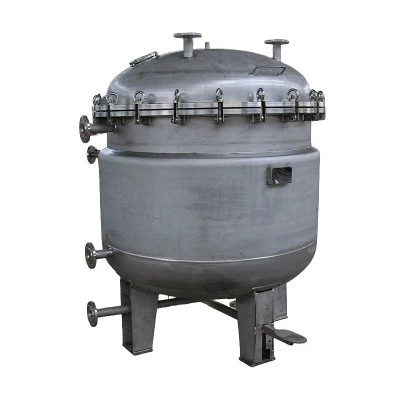
The main components of a stainless steel demister include demister elements, support structure, fixing devices, and matching drainage components. The specific configuration needs to be determined based on the equipment type, processing air volume, and operating environment. Common stainless steel demisters are mainly divided into two types: wire mesh demisters and baffle plate demisters. Wire mesh demisters typically consist of stainless steel wire mesh, a grid, and support beams, using the fine mesh to capture droplets entrained in the airflow. Baffle plate demisters mainly consist of corrugated plates, spacers, and a support frame, changing the airflow direction so that droplets collide with the plates under inertia and gradually accumulate. The manufacturing material is usually selected from 304 or 316L stainless steel based on the corrosiveness of the medium and the operating temperature. 316L has better resistance to pitting corrosion in many chlorine-containing media environments, but the specific material selection still needs to be determined based on the actual operating conditions. The thickness of the demister element, the wire mesh density, the plate spacing, and the overall dimensions should be designed based on parameters such as gas flow rate, droplet size, and allowable pressure drop to avoid excessive resistance due to an overly dense structure or inappropriate spacing that affects droplet collection efficiency. The support and mounting configuration of the demister also significantly impacts the equipment's operational stability. Generally, the equipment requires support beams, support grids, clamping components, and connectors to support the demister elements and prevent displacement under airflow impact or equipment vibration. For stainless steel demisters installed inside spray towers, absorption towers, or other waste gas treatment equipment, an installation frame needs to be designed based on the tower diameter and internal structure to ensure accurate positioning of the demister components and facilitate subsequent disassembly, cleaning, and maintenance. Some equipment may feature a segmented structure depending on the operating conditions, allowing for installation and replacement via maintenance ports. For equipment with larger diameters or uneven airflow distribution, support points should be rationally arranged to reduce deformation caused by excessive localized stress. The connection between the demister and the tower wall also needs proper treatment to avoid significant gaps that could allow mist-laden gas to bypass the demister elements and directly enter subsequent pipelines. In highly corrosive application environments, bolts, connectors, and support components should be made of materials compatible with the main body material and the medium to prevent localized corrosion from affecting the overall structural lifespan.
Stainless steel demisters may also be equipped with drainage structures, flushing devices, and maintenance accessories. During the demister process, droplets accumulate on the surface of the wire mesh or baffle plate and need to be discharged promptly; otherwise, liquid accumulation can easily form, potentially increasing airflow resistance or causing secondary droplet entrainment. Therefore, some equipment incorporates collection tanks, guide plates, or drainage channels into the tower structure to ensure that the captured liquid flows smoothly back to the bottom of the tower or a designated drainage location. For conditions prone to scaling, crystallization, or viscous deposits, flushing pipes and nozzles can be installed as needed to facilitate regular cleaning of the demister elements. Inspection ports, lifting rings, and detachable connectors facilitate equipment installation, maintenance, and component replacement. In actual configuration, the composition of the exhaust gas, droplet characteristics, operating temperature, gas flow rate, equipment space, and maintenance frequency should be comprehensively considered; a fixed configuration cannot be simply applied to all conditions. By rationally combining demister elements, support structures, drainage systems, and auxiliary accessories, the gas-liquid separation effect of stainless steel demisters can be improved, reducing blockages, deformation, and maintenance problems during operation.
Send Inquiry